

The Making of “Maqtal”with Nad E Ali
Name, age, where are you from, what format you like using, what are you currently working on?
My name is Nad E Ali. I am a 35-year-old photographer and interdisciplinary artist based in Lahore, Pakistan. My practice moves across different photographic formats depending on the emotional and conceptual needs of the work. I often work with 35mm film, but I also use digital cameras such as the Fuji XT-5, and occasionally medium-format film. Each format holds a different relationship to time, texture, and memory, and I like allowing the medium to respond to the atmosphere of the project.
Recently, I have been thinking about ideas of love, belonging, and emotional proximity— how people search for connection in fragile and uncertain spaces. I try to approach these themes intuitively, letting the work emerge slowly through lived encounters and everyday observations.
What about your surroundings, environment, and upbringing interested you?
I grew up in a modest working-class neighborhood in Lahore. Much of my childhood was spent indoors, and because of that the outside world felt distant and full of mystery. I developed a strong curiosity about the city the streets, the people, and the quiet lives unfolding beyond the walls of my small house.
This early sense of distance shaped how I look at the world today. Photography became a way to step outside, to explore the city, and also to understand my own history and the social environments that formed me. Lahore itself often feels layered with different temporalities memories of the past existing alongside the uncertainties of the present and that layered quality continues to inform the way I photograph the city.
When was the first time you encountered photography? How did it feel?
My first meaningful encounter with photography came through a television interview with a photographer whose work had a painterly quality. Seeing those images left a deep impression on me and made me curious about the possibilities of the medium.
At the time, I imagined becoming a painter and was preparing for art college. Photography initially felt intimidating because it demanded both technical understanding and a new way of seeing. I didn’t own a camera then, so I worked in a family business and saved money until I could eventually buy my first one.
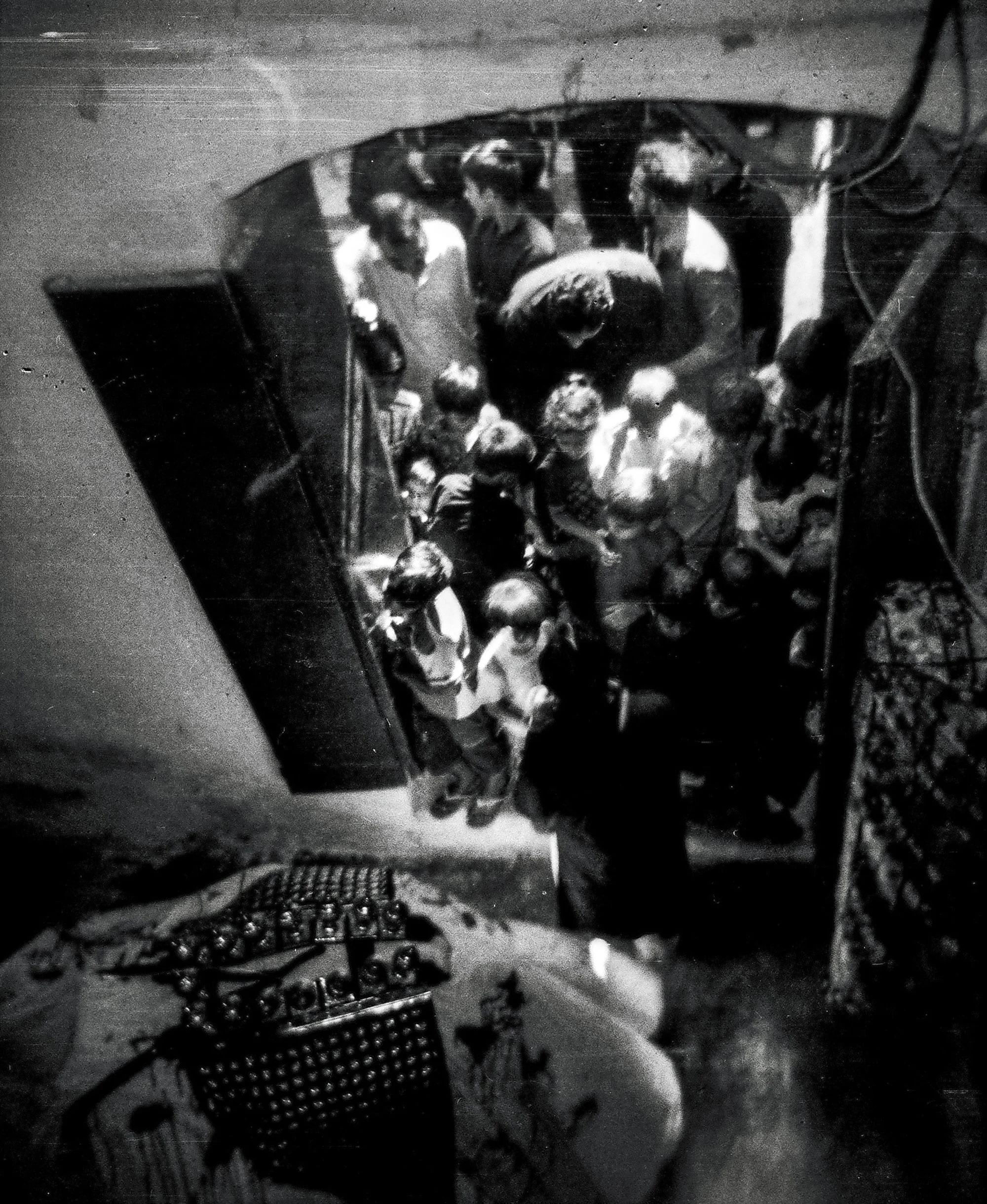
When I finally had the camera, I went to photograph a shrine near my house. The place had always felt mysterious to me filled with devotion, silence, and untold stories. Photographing there felt like discovering a new language through which I could observe and understand the world around me.
Tell us about current projects you have been working on.
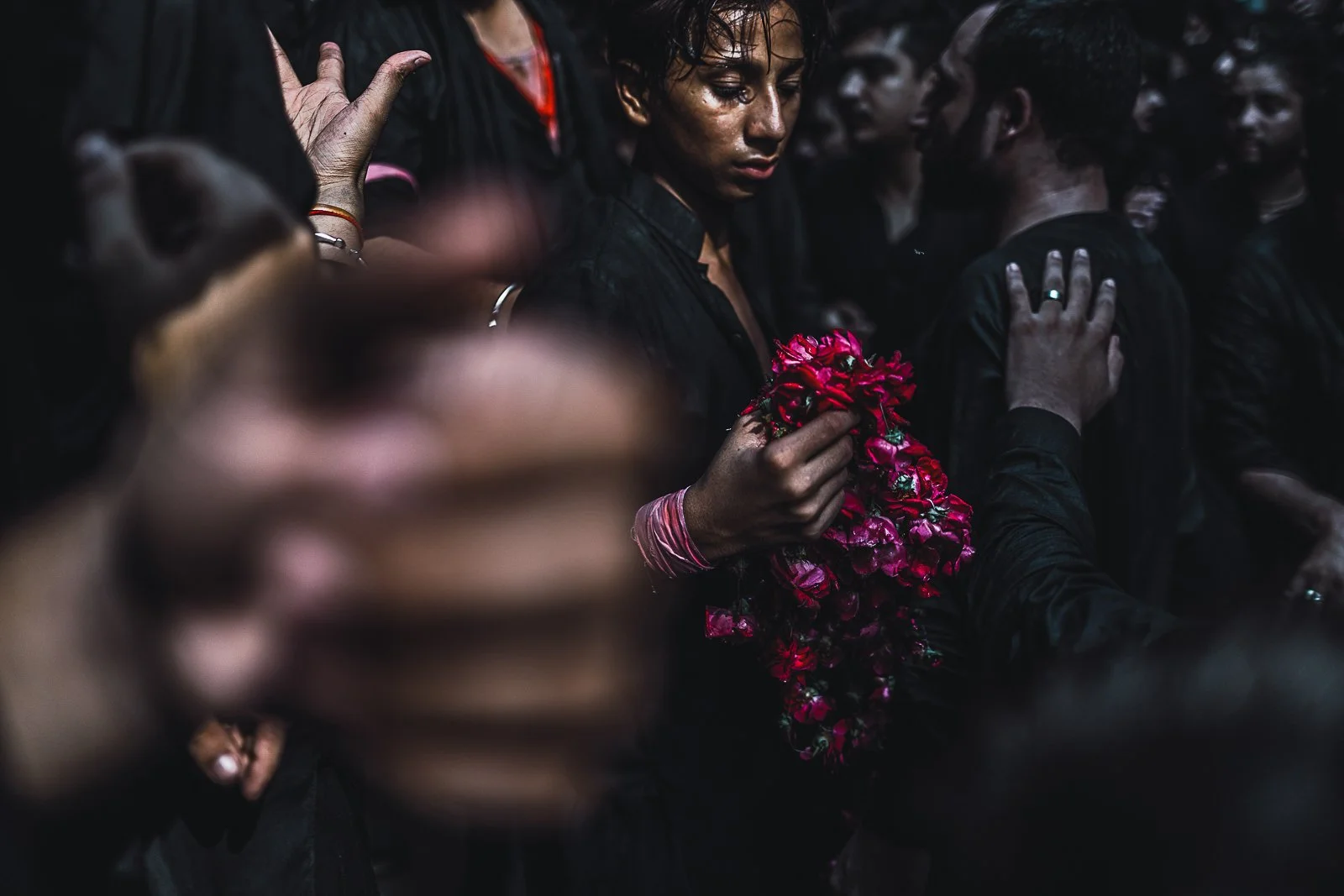
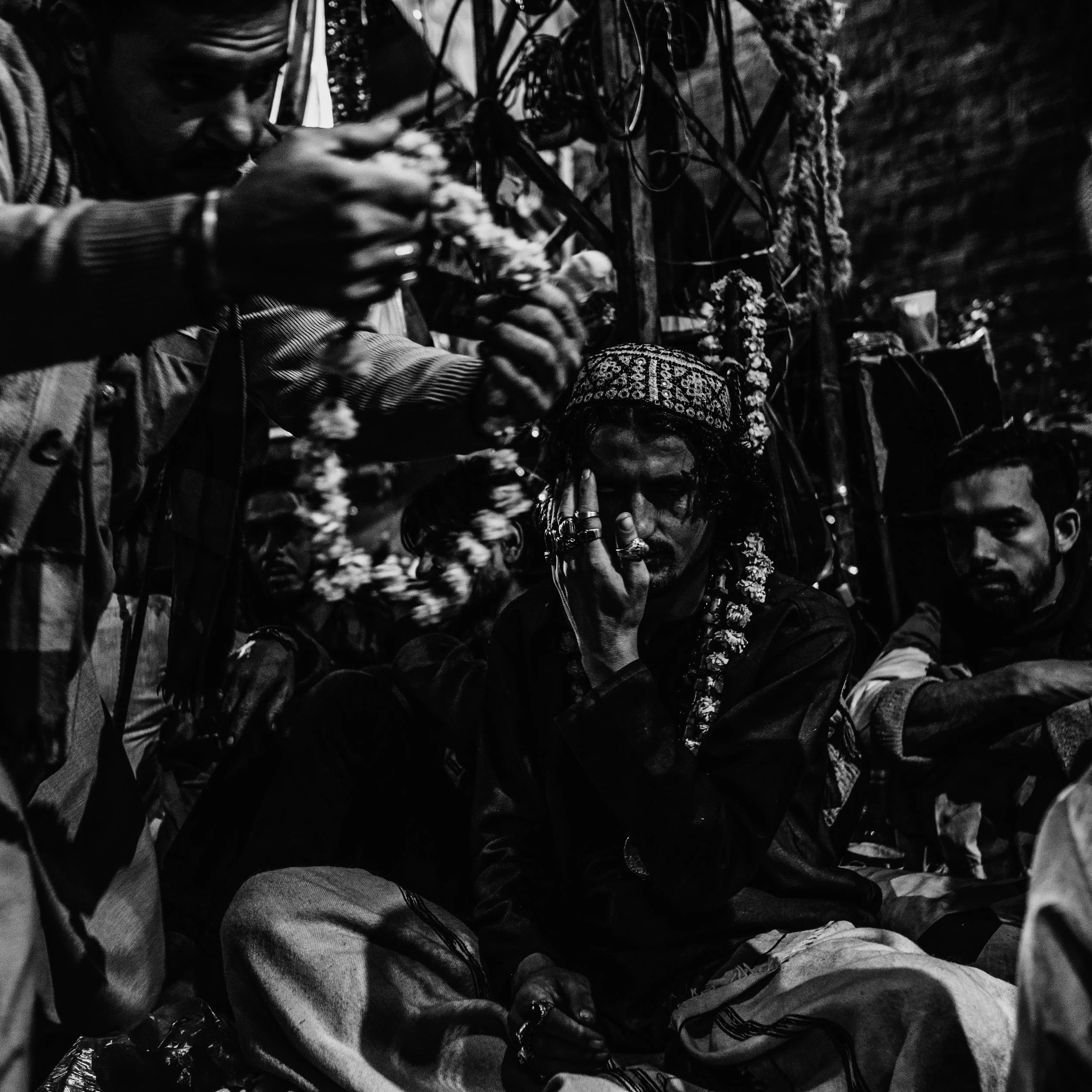
Much of my work revolves around memory, faith, and the search for belonging within personal and collective histories. I am currently working on my first photobook titled Maqtal, which grows out of my experiences as a member of the Shia Muslim community in Pakistan. As a religious minority, many of my childhood memories are intertwined with the rituals of
Muharram processions, mourning gatherings, and the collective act of remembrance surrounding the martyrdom of Imam Hussain. Through this project I reflect on grief, devotion, vulnerability, and resilience, while also exploring how communities hold on to faith in the face of social and political pressures.
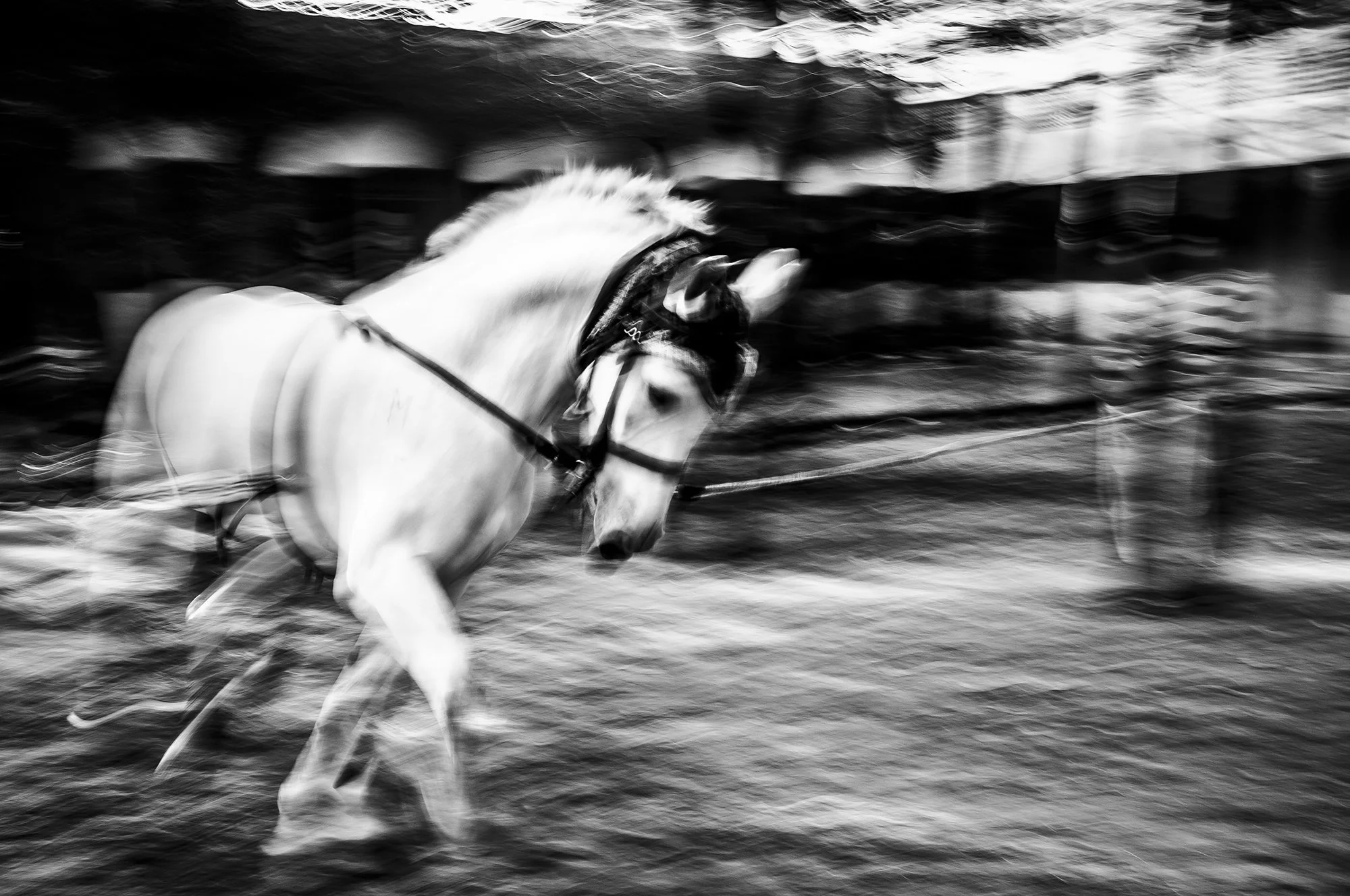
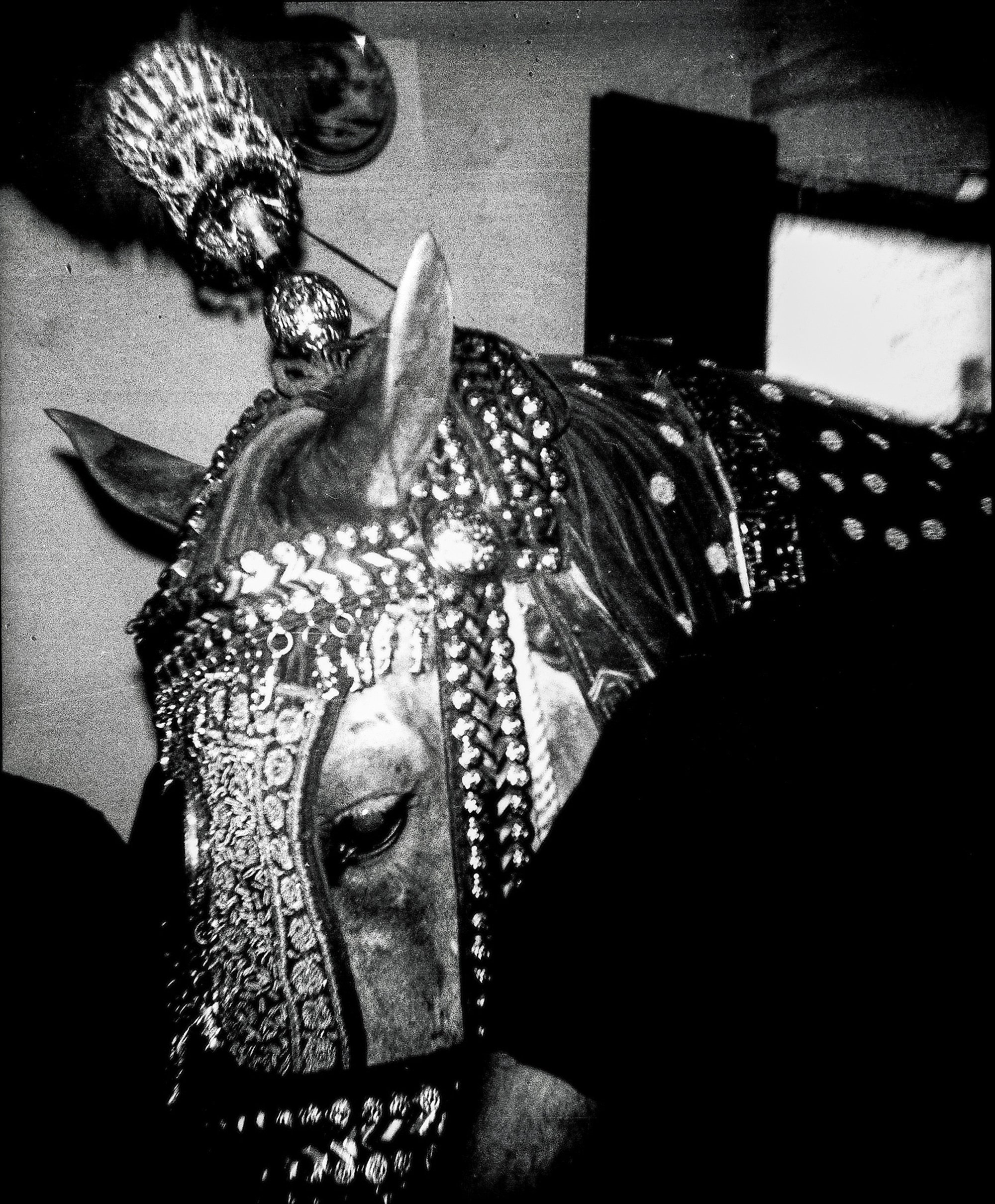
Alongside this, my series Horse/Men looks at the presence of the horses used in the Shabih-e Zuljanah processions that take place during Ashura in Lahore. These processions, which have existed in the city for generations, move through the historic walled city before culminating at Karbala Gamay Shah. At the center of the ritual is the Zuljanah the symbolic horse associated with the martyrdom of Imam Hussain. In this body of work, I focus on the subtle relationship between the horses and their caretakers. Amid the intensity of the procession, these animals become both sacred symbols and living witnesses, embodying a quiet bond between devotion, memory, and the people who care for them.
Another body of work, Hauntology of Lahore, explores the city through the idea of hauntology, a concept introduced by the philosopher Jacques Derrida. The series reflects on how traces of unrealized futures and forgotten histories continue to linger within the spaces we inhabit. Lahore often feels haunted by multiple temporalities its architecture, streets, and everyday rituals holding fragments of stories that remain partially visible yet unresolved. Through these images I try to pay attention to overlooked details and fleeting atmospheres that reveal the city as a space where past, present, and imagined futures coexist.
Across these projects, photography becomes a way to navigate personal memory while also connecting with broader collective experiences. The work attempts to create quiet moments where grief, faith, and belonging can be shared and reflected upon.
How did you develop your visual literacy? Why are you drawn to certain images?
My visual language developed slowly through exposure to many forms of art painting, literature, cinema, and photography. I think visual literacy evolves through curiosity and through spending time with images that stay with you.
I am often drawn to photographs that carry a sense of emotional honesty. Recently I have been deeply inspired by the work of Nan Goldin, whose images document her community with extraordinary intimacy and vulnerability. Her work reminds me that photography can function not only as an artistic practice but also as a form of care and witnessing within one’s own community.
Imagine meeting someone picking up a camera for the first time. What would you tell them?
I would encourage them to trust their instincts and photograph from their intuition. Technical knowledge is important, but it can always be learned with time. What matters most in the beginning is learning how to observe and to recognize the emotional weight within a moment.
Photography becomes meaningful when it grows from curiosity and honesty. I would tell them to remain open, spontaneous, and patient with their process, because discovering one’s own visual language is something that unfolds gradually.